You’re tired of hearing that short-form video is the future. You’ve seen the flashy case studies. You’ve watched competitors post dancing clips and product unboxings. And yet a lot of the campaigns you’ve tried felt expensive, time-consuming, and underwhelming.
Here’s the thing. Most of the disappointment comes from how people are doing it, not from the format itself.
I’ve spent the better part of a decade testing paid and organic short-form across TikTok, Instagram Reels, YouTube Shorts, and even LinkedIn for B2B clients. The pattern is consistent: when done with intention, short-form still returns more attention, more engagement, and more pipeline per dollar than almost any other content type most mid-sized teams can produce. But “done with intention” is the part most teams skip.
Why the ROI numbers still hold
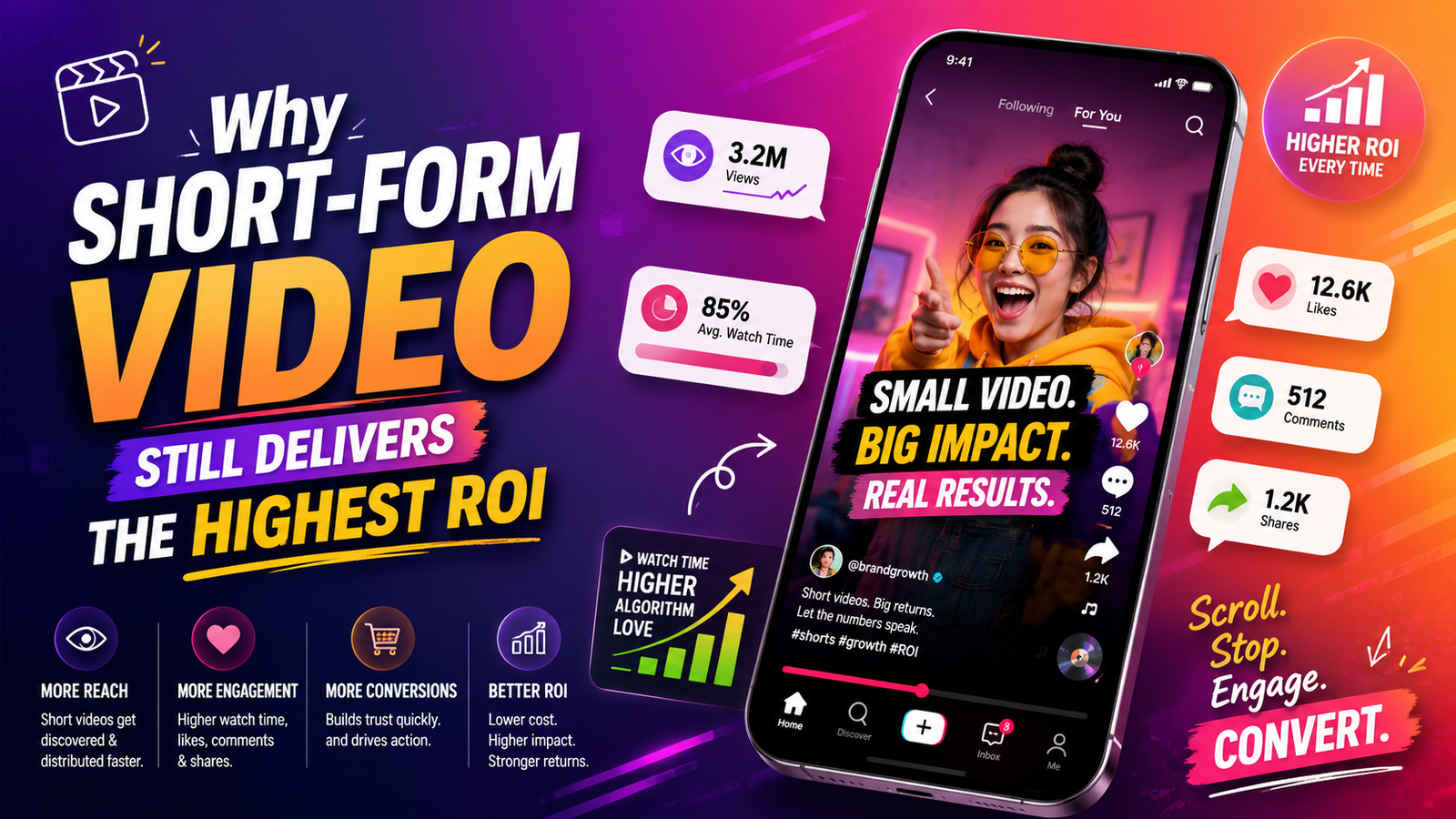
Attention is the scarce resource. Short-form platforms still reward content that stops the scroll in the first two seconds and keeps people watching. The algorithms are built around completion rate, rewatches, and shares. That creates a feedback loop that longer videos and static posts simply can’t match at the same cost.
Production cost is another piece. A solid 30-second vertical video can be shot on a phone, edited in CapCut or native tools, and posted the same day. Compare that to a 90-second polished brand film or a full webinar production. The cost difference is real. I’ve run campaigns where a series of six phone-shot videos outperformed a single agency-produced spot that cost twelve times more.
Engagement rates stay higher too. Comments, saves, and shares happen faster on short-form. That social proof then feeds the algorithm and reduces your effective cost per view on paid. I’ve seen client accounts where organic short-form drove enough engagement that the paid boost needed for reach dropped by 40% over three months.
Conversion isn’t automatic, of course. But the path is shorter. A strong hook plus a clear next step (comment keyword, link in bio, or landing page with matching creative) can move people from discovery to action in the same session. Longer formats often require multiple touches.
None of this means every short video is a winner. It means the format still has structural advantages if you respect how people actually watch.
Where most brands mess it up
I once worked with a mid-sized ecommerce brand that had spent six figures on short-form in a year and saw almost no lift in attributed sales. Their videos looked beautiful. Professional lighting, branded lower thirds, careful product shots. They also averaged under three seconds of average watch time. People scrolled past because nothing grabbed them.
They were treating short-form like a miniature TV commercial. That’s the most common mistake. Another frequent one: simply cutting longer videos into 15- or 30-second clips without rewriting the open. The original long-form version might have a slow build that works when someone has already clicked. On the feed it dies.
A third pattern I keep seeing is teams posting consistently for three weeks, then stopping when the numbers look soft in the first ten days. Short-form rewards volume and iteration more than perfection. One strong video can carry an account for a while, but the real compounding comes from testing hooks, formats, and offers weekly.
Look. Polished can work if the idea is sharp. But most of the time the “perfect” version underperforms the slightly rough one that feels human and starts with a clear problem or curiosity gap.
How to make short-form work harder
Start with the first two seconds. Write the hook before you shoot anything else. Test three versions of the same idea with different openings. One might be a bold claim, one a quick visual pattern interrupt, one a direct question aimed at your customer’s frustration. Post them. Watch the retention graphs. Keep the winner and kill the rest.
Keep the middle useful or entertaining, not just pretty. If you’re selling a product, show the before-and-after or the specific problem it solves in real time. If you’re building a service brand, give one concrete tip the viewer can use today. People stay for value or for emotion. They leave when they feel sold to without getting anything.
End with a clear, low-friction next step. “Comment ‘guide’ and I’ll send it” still works better than “link in bio” for many accounts because it creates a reply and a conversation. For paid, match the creative to a simple landing page that continues the same message. Don’t send cold traffic to a homepage that looks nothing like the video.
Shoot more than you think you need. Batch in one afternoon. Film five variations of the same core idea with different hooks or slightly different angles. Edit the strongest three. This is how you find what actually resonates instead of guessing.
Measure what matters for your goal. If you’re using short-form for awareness, track cost per 3-second view and completion rate. If you’re driving leads or sales, track the full path: view → profile visit or link click → conversion. Vanity metrics like pure views are easy to inflate and rarely tell you if the content is working.
I saw this play out with a local service business (home renovation). The owner started filming simple phone videos answering the exact questions people asked him in consultations. No fancy transitions. Just him talking, showing a problem wall or floor, and explaining the fix. Within eight weeks those videos were driving more qualified inbound calls than their previous Google Ads spend. The difference wasn’t production quality. It was relevance and consistency.
Another client in B2B software kept trying to make “thought leadership” short videos that felt like mini keynotes. Engagement was flat. We switched to short clips of real customer objections and how their product handled them, filmed in a casual screen-share style. Reply rates and demo requests both moved. Same team, same product. Different approach to the format.
The honest limitations
Short-form is not a magic channel. It rewards frequency. If your team can only post once every two weeks, results will be slower and more expensive. It also favors accounts that sound like people, not press releases. Highly regulated industries have to work harder to stay interesting while staying compliant.
Attribution can be messy. A viewer might watch three of your videos over two weeks, then search your brand and convert through another channel. Platform analytics will under-count that. You need some first-party tracking or simple UTM discipline if you care about precise ROI numbers.
And the platforms change. What works on one algorithm shift can soften on the next. That’s why testing and iteration matter more than any single “best practice” list.
You also can’t force every product into short-form. Complex enterprise sales with six-month cycles still need longer content and human conversations. Short-form can support awareness and nurture, but it rarely closes those deals alone.
What to try this week
Pick one product, service, or common customer question. Film three 20–30 second versions on your phone. Different hooks, same core point. Post them over three days. Don’t over-edit. Watch the retention and comment data. Keep the best-performing structure and build the next batch around it.
That’s it. No big production. No waiting for perfect lighting. Just start the feedback loop.
Short-form still delivers strong ROI because it matches how people actually consume content right now. The teams that treat it like a testing ground instead of a miniature film studio keep winning. The ones that chase perfection or copy last year’s trends keep wondering why their numbers look soft.
The format isn’t broken. The execution usually is. Fix that, and the returns show up.
