Your rankings look solid. The content is solid. Traffic from classic search is soft, and half the time people never click through because an AI summary already answered their question.
Sound familiar?
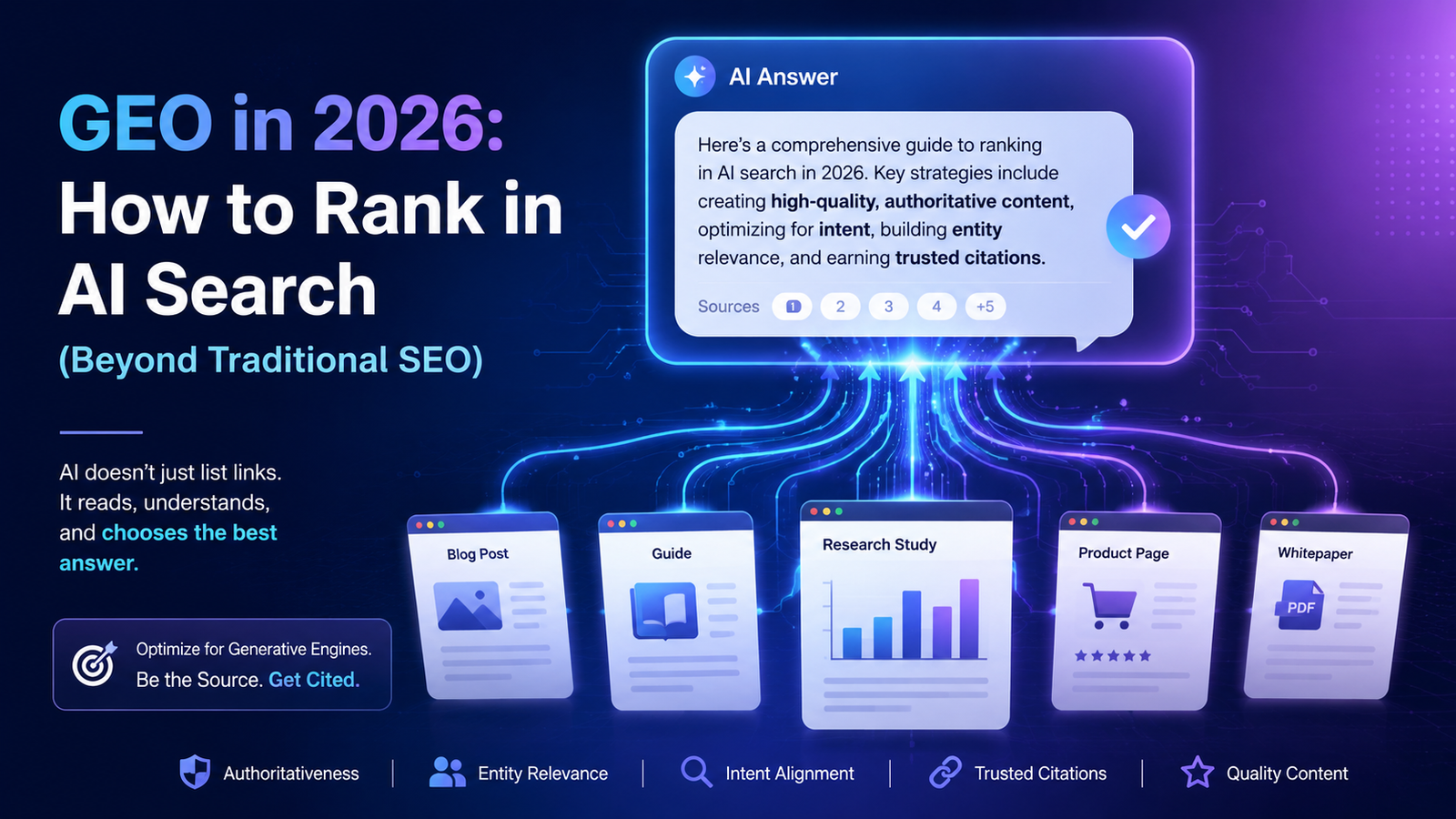
I’ve watched this play out with clients for a couple of years now. The old playbook still matters, but it no longer guarantees visibility. AI search systems—Google’s AI Overviews, Perplexity, ChatGPT’s search mode, and the others—don’t rank pages the same way. They synthesize answers and decide which sources to pull from. If your content isn’t structured and credible enough to be one of those sources, you get left out of the conversation.
That’s GEO. Generative Engine Optimization. It’s not a fancy new acronym to chase. It’s the practical work of making your content easy for these systems to trust, extract, and cite.
What GEO Actually Is
GEO is the set of practices that increase the odds your material shows up inside AI-generated answers. You’re not just trying to rank number one in the blue links. You’re trying to become a preferred source the model reaches for when it builds a response.
Traditional SEO still gets you into the index and helps with classic results. GEO focuses on extractability, authority signals, and completeness. The AI needs to understand your content quickly, trust it, and lift accurate pieces without much friction.
It’s not magic. And it’s not a replacement for good SEO. It’s the layer on top that many people are still treating like an afterthought.
Why the Old SEO Habits Fall Short
I once worked with a mid-sized B2B software company that had spent years perfecting their keyword targeting. Pages ranked well for competitive terms. Organic traffic was decent. Then AI Overviews started answering the exact questions their prospects asked. Overnight, a big chunk of that traffic disappeared. The pages were still ranking. People just weren’t clicking as much because the summary already gave them enough.
Their content was competent but thin on unique perspective. It repeated the same points every other vendor made. The AI systems had plenty of similar sources and rarely chose theirs.
That’s the pattern I keep seeing. Keyword-optimized pages that answer the surface question but lack depth, original data, or clear structure get skipped. The systems favor content that feels complete and citable.
Another common miss: treating every page like a ranking target instead of a source document. AI models pull from pages that define terms cleanly, present comparisons in tables or lists, and back claims with specifics. Vague thought leadership posts full of soft language don’t travel well.
The Real Shifts You Need to Make
Stop writing primarily for ranking algorithms and start writing so machines can confidently use your work.
First, answer the full question. Not the keyword. The actual question a buyer or researcher would ask. If someone wants to know the pros and cons of three approaches, cover all three with concrete detail instead of pushing your preferred option early.
Second, make extraction easy. Use clear headings that match how people phrase questions. Break information into short paragraphs, bullet lists, and simple tables. Define key terms early. AI systems love clean structure because it reduces the risk of mis-summarizing you.
Third, give them something unique. Original numbers, internal data, specific case results, or a clear point of view backed by evidence travel farther than recycled advice. One client in the professional services space published a short internal survey of 120 of their own customers on pricing sensitivity. They turned the findings into a clean page with a couple of charts and plain-language takeaways. Within a few months that page started appearing in AI answers for related queries far more often than their older, more “optimized” posts.
Fourth, strengthen the signals that tell systems you’re credible. Consistent authorship, clear expertise markers, up-to-date information, and mentions of your brand or content across other reputable places all help. This isn’t new, but the weight has increased because generative systems are more cautious about hallucinating or pulling from weak sources.
Practical Steps That Actually Move the Needle
Here’s what I’ve seen work when people stop theorizing and start shipping changes.
Audit your highest-intent pages first. Pick the 10–15 pages that already attract traffic or target commercial questions. For each one, ask: Does this fully answer the real question someone would type or speak? Is the structure scannable? Is there any original insight or data that isn’t on every competitor’s site?
Rewrite or expand the weak ones. Add a short definition section near the top if the topic is technical. Turn comparison points into a simple table. Include one or two specific examples with numbers or outcomes where you can. Keep the language direct.
Update older content on a regular cadence. Freshness still matters. A page last meaningfully updated two years ago is less likely to get pulled than one that reflects current tools, pricing ranges, or market conditions.
Build topical clusters that reinforce each other. One strong pillar page plus supporting pieces that link and expand on related questions creates a denser set of signals. The AI doesn’t need every page to rank; it needs enough connected, high-quality material from your domain.
Track citations where you can. Search your brand and key phrases inside the major AI tools periodically. Note when you appear and when competitors do. It’s imperfect measurement, but patterns emerge fast. You’ll see which formats and topics get referenced more often.
Don’t ignore classic technical SEO. Clean site structure, fast loading, proper indexing, and solid internal links still help the underlying systems discover and understand your content. GEO sits on top of that foundation. Skip the basics and the rest gets harder.
What Usually Doesn’t Work
I’ve watched teams waste months on tactics that sound clever and deliver almost nothing.
Keyword density games and forced synonym stuffing still fail. The systems are better at understanding natural language than they were a few years ago. Forcing phrases makes the content worse for humans and less useful for extraction.
Publishing a flood of thin AI-generated posts in the hope of covering every long-tail query rarely pays off. Volume without depth just adds noise. The models already have access to plenty of mediocre content. They don’t need yours if it doesn’t add signal.
Obsessing over exact schema markup as a silver bullet is another common detour. Structured data can help in some cases, but clear writing and strong substance matter more. I’ve seen well-structured pages without fancy schema get cited regularly and heavily marked-up pages get ignored when the content itself was generic.
Treating GEO as a pure technical project run only by the SEO team also tends to stall. The people closest to the product, customers, and real questions need to be involved. Otherwise you end up with perfectly formatted content that still misses what buyers actually care about.
Honest Limitations
You cannot force an AI system to cite you. The models have their own training data, retrieval methods, and safety filters. Some topics and industries will always be harder because the systems lean on a small set of highly authoritative sources.
Measurement remains incomplete. You can see some citations and track referral patterns, but you won’t get perfect attribution the way you once did with classic organic search. Accept partial visibility and focus on the pages and formats that show up most often.
GEO also doesn’t eliminate the need for traditional rankings. Plenty of users still click through to full pages, especially for complex decisions, comparisons, or when they want more depth than a summary provides. Neglect classic SEO and you’ll lose both channels.
And speed of change is real. The tools evolve. What works strongly this quarter can shift. The durable advantages are still the same ones that always worked: clear expertise, useful original information, and content that respects the reader’s time.
What to Try This Week
Pick one important page that targets a real customer question. Read it as if you’ve never seen it before. Then rewrite the opening to answer the question directly in the first couple of paragraphs. Add one unique data point, example, or comparison table if you can. Clean up the headings so they match natural language. Publish the update and check the major AI search tools over the next couple of weeks to see whether the page starts appearing more often.
That’s it. One page. Real improvement. You’ll learn more from shipping that change than from reading another round of theoretical advice.
The teams making progress in 2026 aren’t chasing every new tactic. They’re treating their best content like source material that needs to be clear, complete, and worth citing. Do that consistently and you’ll show up in both the classic results and the AI answers. Most of your competitors are still optimizing for yesterday’s search experience. You don’t have to.
